
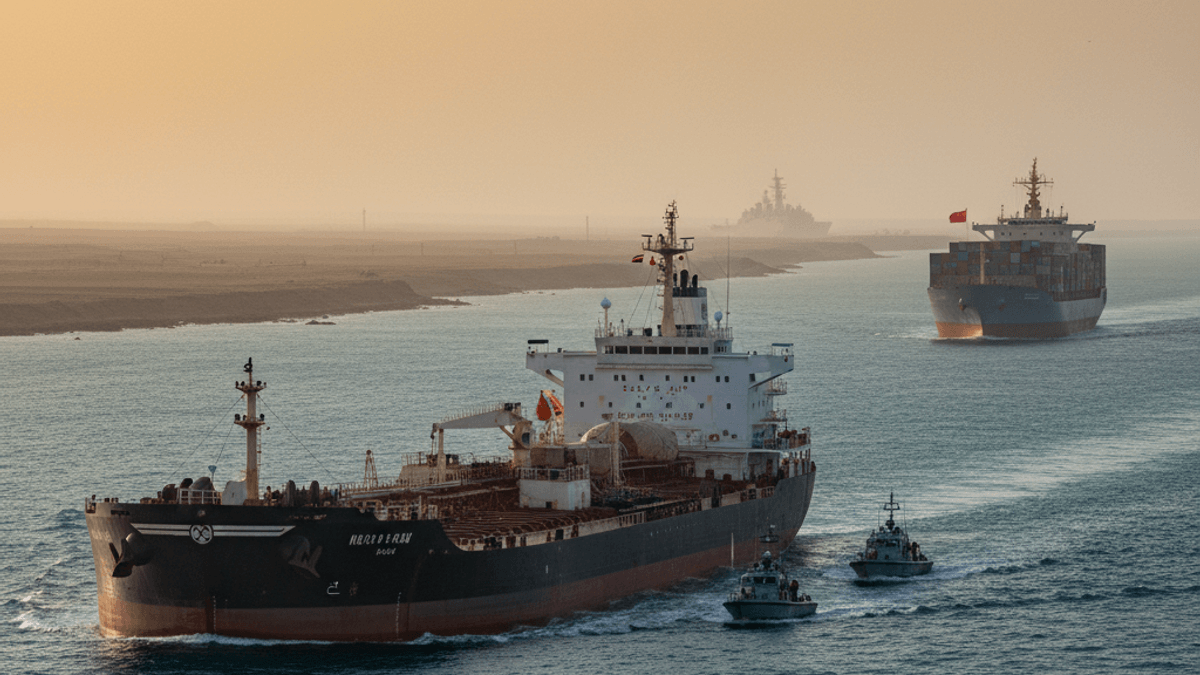
Tankers and patrol boats navigate a busy shipping lane at dawn, highlighting global trade tensions.
The United States has implemented a naval blockade on Iran’s shipping, a move Defense Secretary Pete Hegseth described as a “gift to the world” intended to neutralize Iran’s perceived threat to global security. The blockade, initiated on April 13, 2026, in the critical Strait of Hormuz, has generated significant concerns regarding regional stability and the integrity of global trade routes.
Iran Evades Blockade, Continues Oil Exports
Despite official US statements that the blockade has successfully intercepted 34 ships, maritime intelligence from firms like Lloyd’s List Intelligence and Windward indicates that Iran is continuing its sanctioned oil exports. This evasion is reportedly achieved through a “shadow fleet traffic” and “deception” strategy, which involves manipulating tracking data and transiting through Pakistani territorial waters. This tactic allows Iran to circumvent the US-imposed restrictions and sustain its oil revenue streams.
Economic Resilience and Political Challenges
Contrary to claims of Iran’s financial collapse, the country has reportedly seen a recent 40% increase in oil export revenues. Iran’s substantial crude oil reserves enable it to maintain revenue from oil in transit for several months, even under blockade conditions. The US faces considerable political and legislative hurdles in sustaining this blockade, including a critical May 1 deadline for congressional approval. Furthermore, opposition from China regarding potential trade disruptions adds another layer of complexity to the US strategy.
Historical Parallels and Shifting Dynamics
The current crisis echoes the 1980s Iran-Iraq Tanker War, marked by significant disruptions to shipping and oil prices. However, key differences are apparent. The US lacks widespread allied support for this blockade, and Iran has adopted an offensive asymmetric military posture focused on deterrence rather than direct confrontation. Iranian officials have stressed national unity and military resilience in response to the sustained international pressure.