
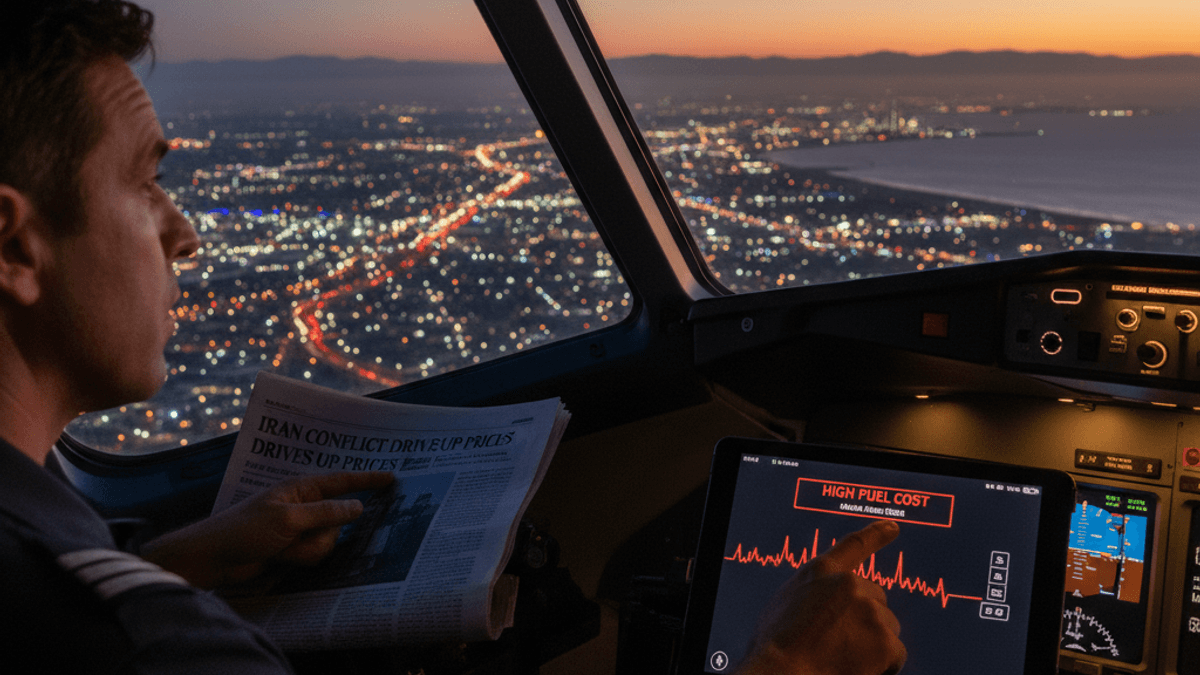
Pilot reads about Iran conflict impacting fuel prices while flying over California.
War in Iran Drives Up Costs for California Travelers
The ongoing conflict in Iran is creating significant ripples throughout the airline industry, with direct consequences for consumers, particularly in California. A recent discussion on CBS Los Angeles highlighted the intricate connection between geopolitical events and everyday economic realities, specifically focusing on how the war is influencing fuel prices and, consequently, airline fares.
Brian Sumers, the editor of The Airline Observer, shared his insights during the segment, explaining the mechanisms through which the war in Iran is affecting the cost of air travel. His analysis underscores the vulnerability of global supply chains and the immediate impact of international conflicts on regional economies and consumer expenses.
Impact on Fuel Prices and Airline Operations
Sumers detailed how the situation in Iran directly translates into higher operational costs for airlines. Crude oil prices, a critical component of aviation fuel, are highly sensitive to geopolitical instability in major oil-producing regions. The conflict in Iran, a significant player in the global energy market, has led to increased uncertainty and potential disruptions in oil supply, driving up prices worldwide.
This escalation in fuel costs places an immediate burden on airlines, which must then decide how to absorb these increased expenses. For many carriers, the most direct way to mitigate these rising operational costs is by passing them on to consumers through higher ticket prices. This practice is particularly noticeable in markets like California, which has a substantial demand for air travel and is also a major consumer of fuel.
California Consumers Face Higher Airfares
The repercussions for California are significant. Residents and businesses in the state are likely to experience a noticeable increase in the cost of airline tickets. This surge in fares can affect various sectors, from tourism and business travel to the personal finances of individuals planning trips. The war in Iran, though geographically distant, has thus become a tangible factor influencing the travel budgets of Californians.
Sumers’ commentary in the CBS Los Angeles report serves as a stark reminder of the interconnectedness of the global economy. Events unfolding in one part of the world can have swift and substantial effects on seemingly unrelated sectors and regions, underscoring the need for awareness and adaptation in the face of international challenges.
Broader Implications for the Airline Industry
Beyond the immediate impact on fuel prices and fares, the ongoing conflict also introduces an element of unpredictability into the airline industry’s operational planning. Airlines must contend with fluctuating fuel costs, potential flight path adjustments due to regional tensions, and the broader economic uncertainty that often accompanies prolonged conflicts. This environment necessitates strategic decision-making to maintain profitability while managing costs and customer expectations.
The situation highlights the ongoing challenges faced by the airline sector in navigating a complex geopolitical landscape. The war in Iran serves as a current case study, illustrating how global events continue to shape the dynamics of air travel, affecting everything from operational expenses to the final price paid by passengers.